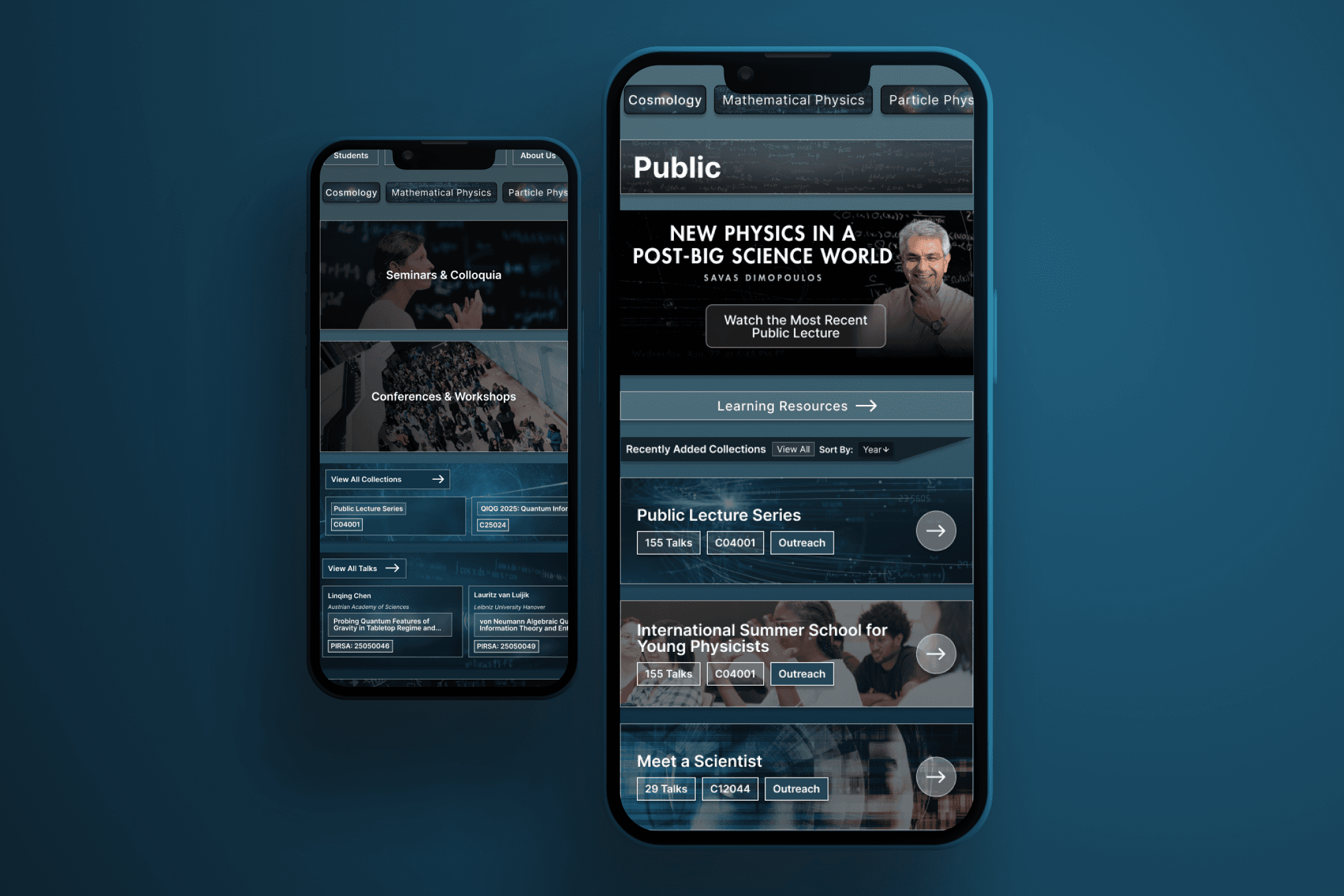
PIRSA
(Perimeter Institute's Recorded Seminar Archive)
Redesigning a video archive home to 17, 400+ theoretical physics lectures.
OVERVIEW
Context
UofT Design Studio course project
Skills
Strategic research, wireframing, personas, user interviews & surveys, usability testing, prototyping
Tools
Figma, FigJam, StoryTribe
PROBLEM
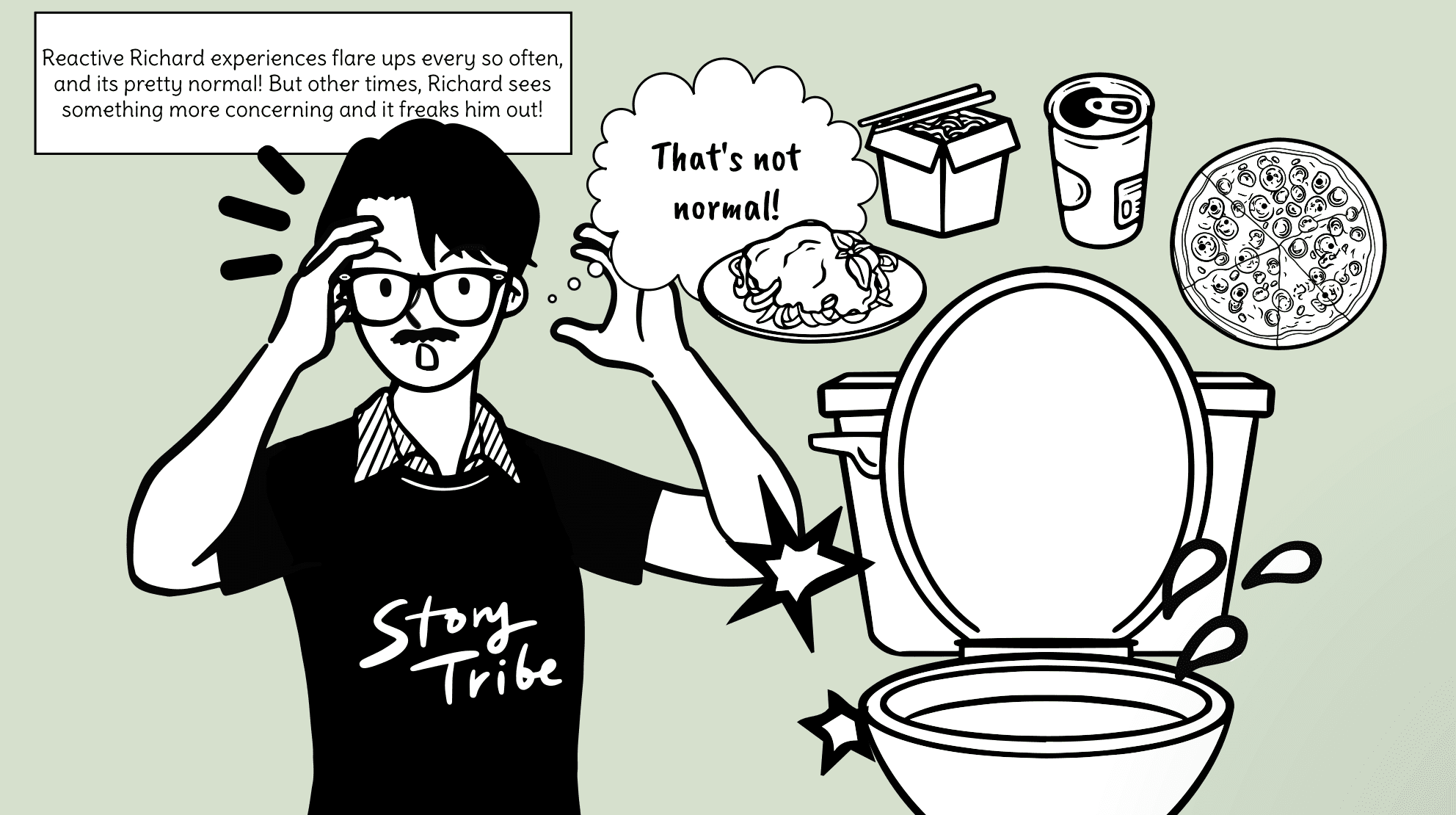
Flare-up triggers are complex are highly varied, social feelings about toilet-talk are tense, and users are hesitant to adhere to the strict tracking schedules that benefit them most.
“People with GI conditions report lower levels of health literacy, limited access to medical care, financial insecurity, and disparities in care”
– Kamp et al., 2024
RESEARCH
8 honest conversations
Consistency
Users reported infrequent daily habits and struggle with consistent tracking routines.
Healthy Anxiety
Users often reported feelings of fear and shame about their gut health symptoms.
Awkwardness
Almost all users told us they kept their symptoms to themselves because they felt awkward talking about it with other people.

"… I feel like there's a fear of them telling me I can't eat certain things. Being like, you are celiac or gluten free, I don't want – I'm very afraid …"
– Interview Participant
Lacking clear, reliable health resources
is a major cause of our user's anxiety.
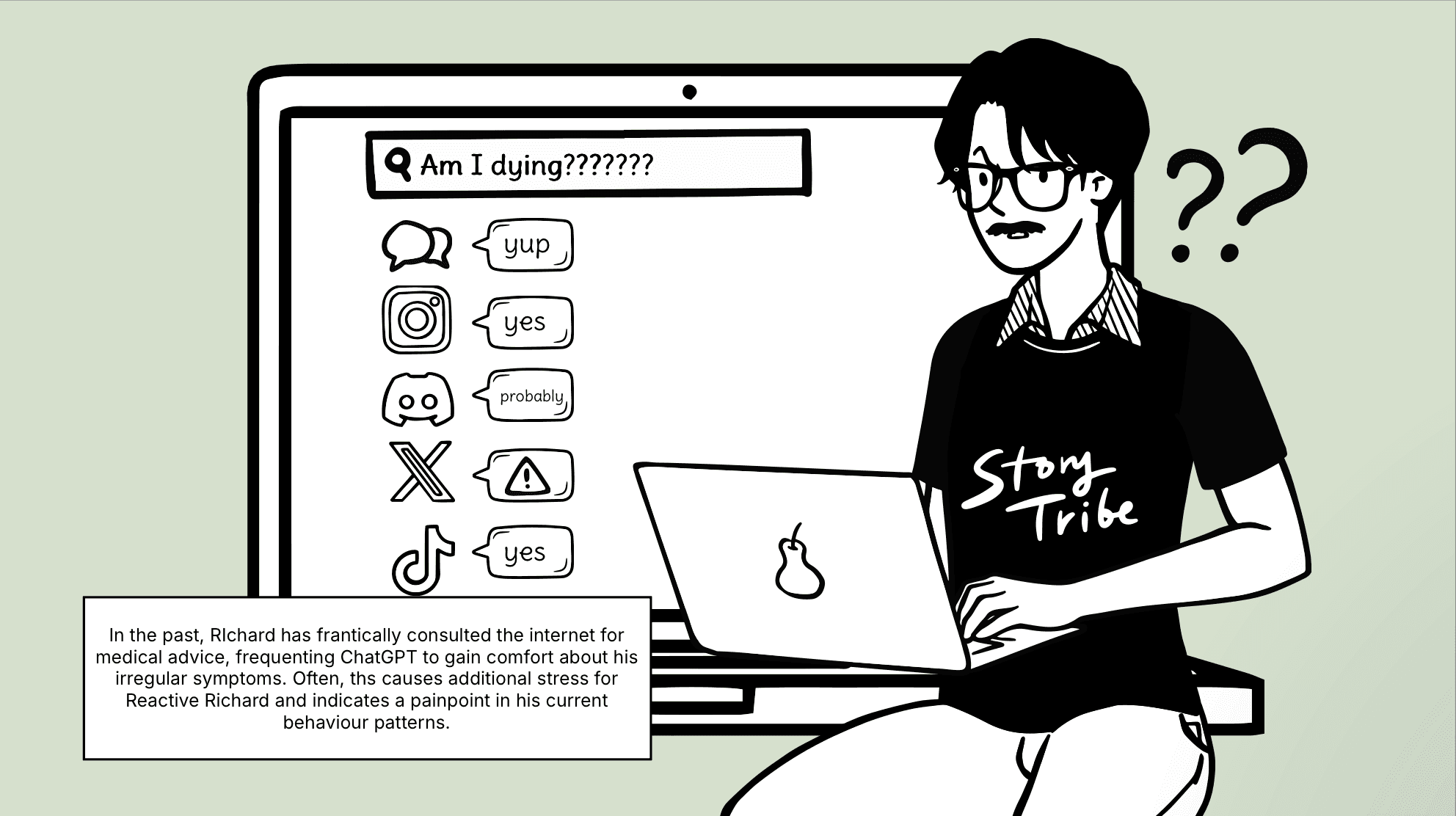
Gut flare-ups are confusing and scary, intensified by information
overload and the absence of clear, long-term symptom patterns.
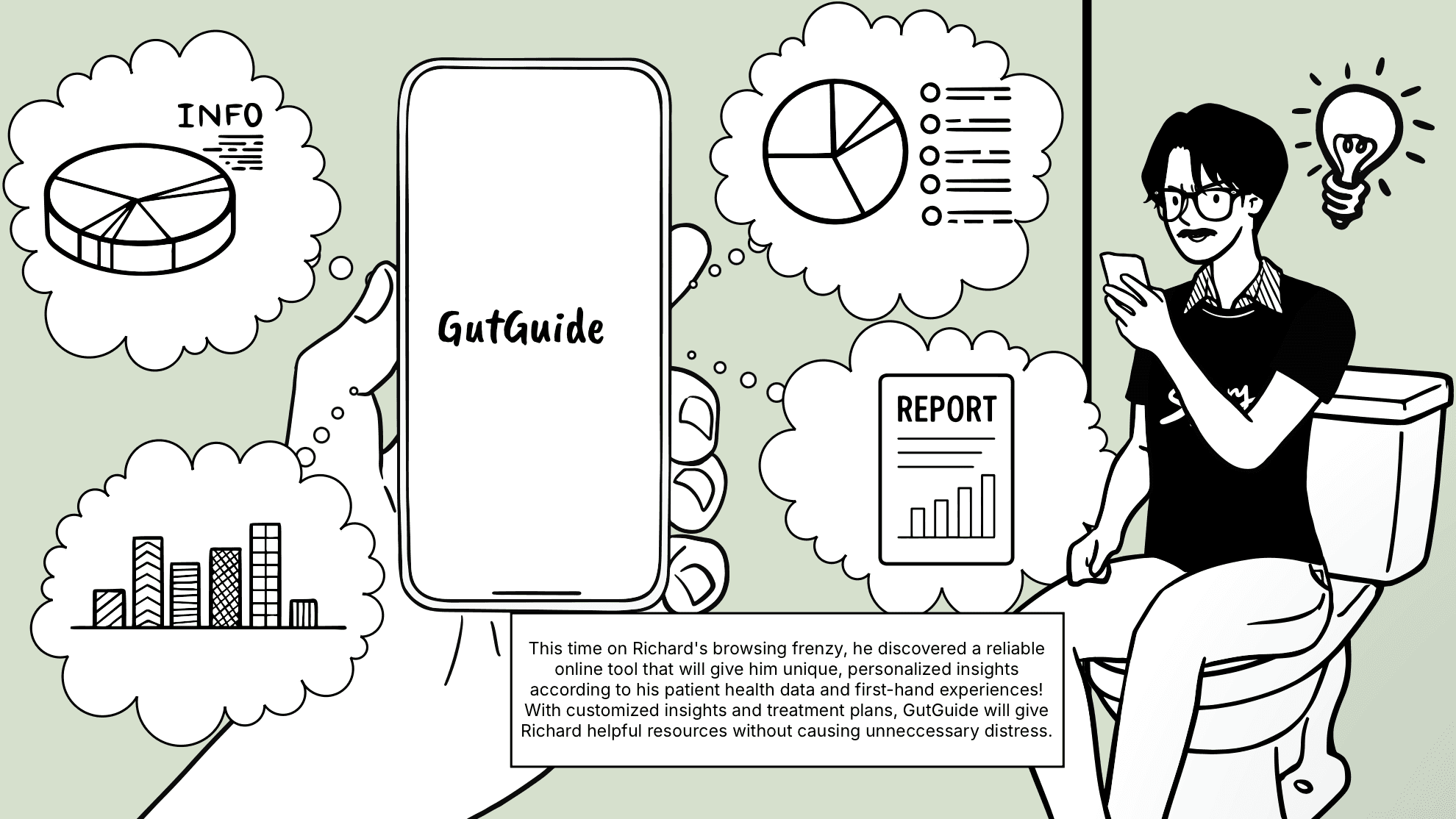
Turning what is my gut doing?
into, ah – I see the pattern.
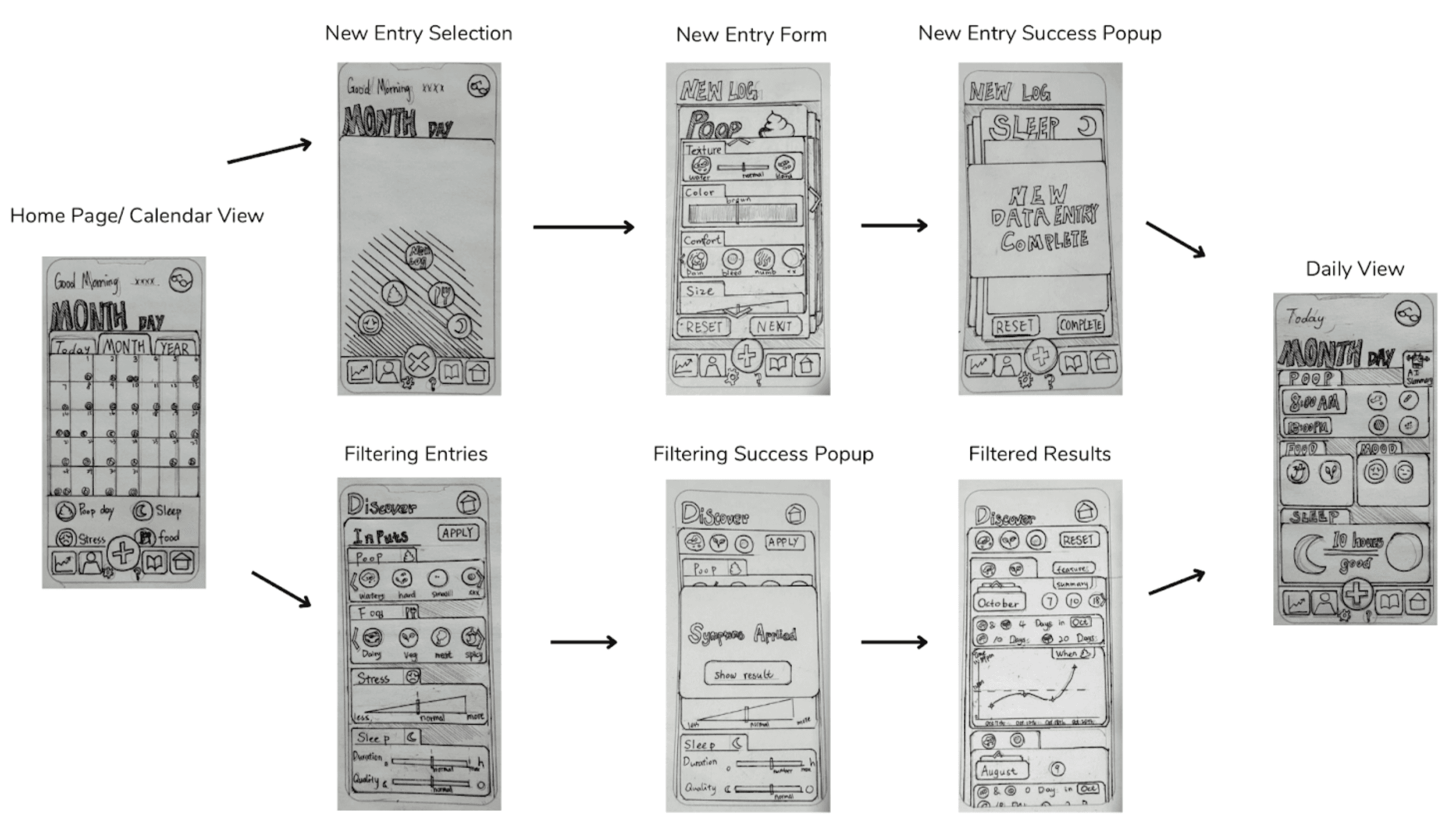
Identifying patterns, articulating symptoms, and knowing treatment options eases
the stress caused by flare-ups. Our golden user-flow focused on these steps.
SKETCHES
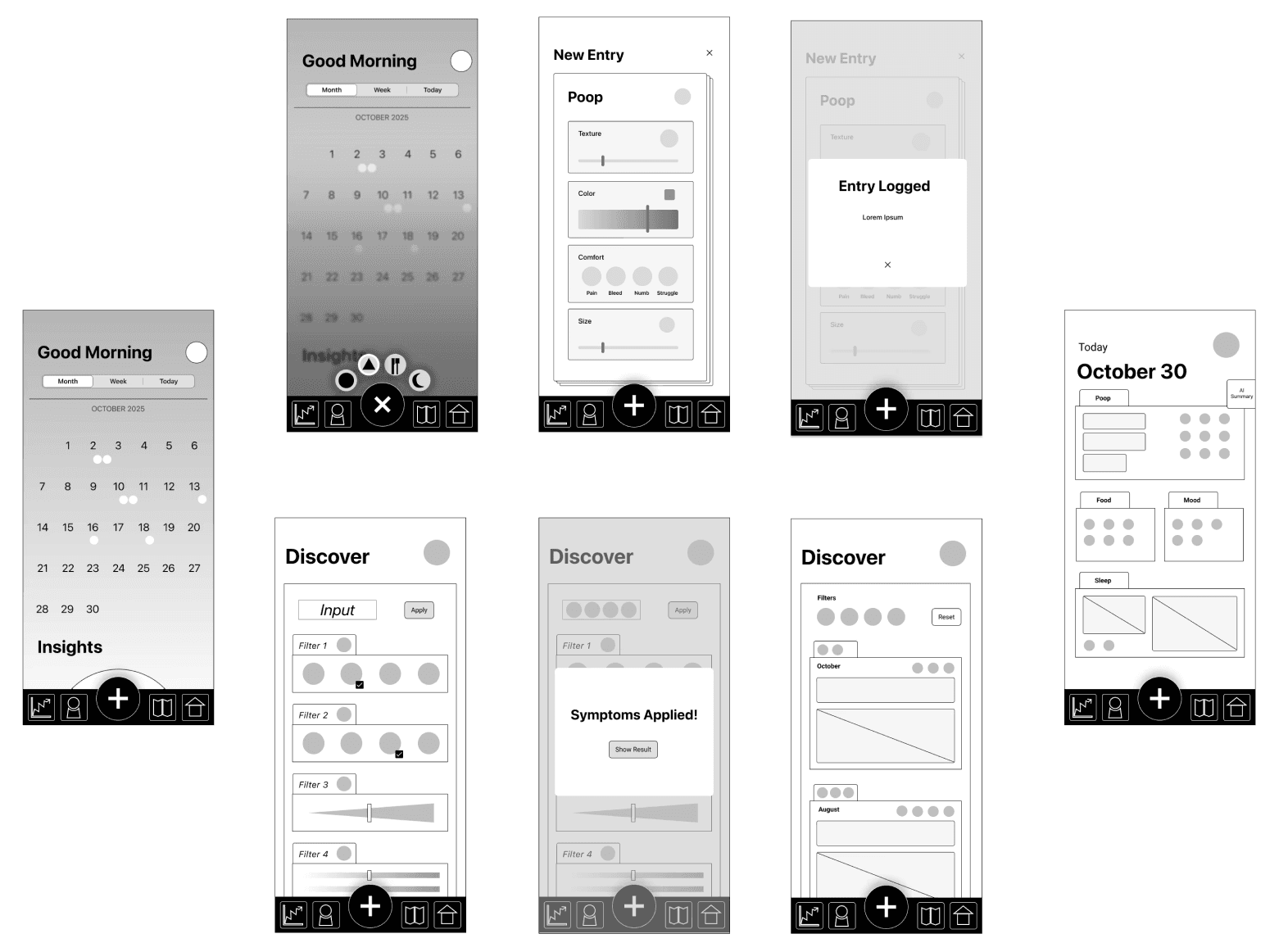
LO-FI WIREFRAMES
DESIGN
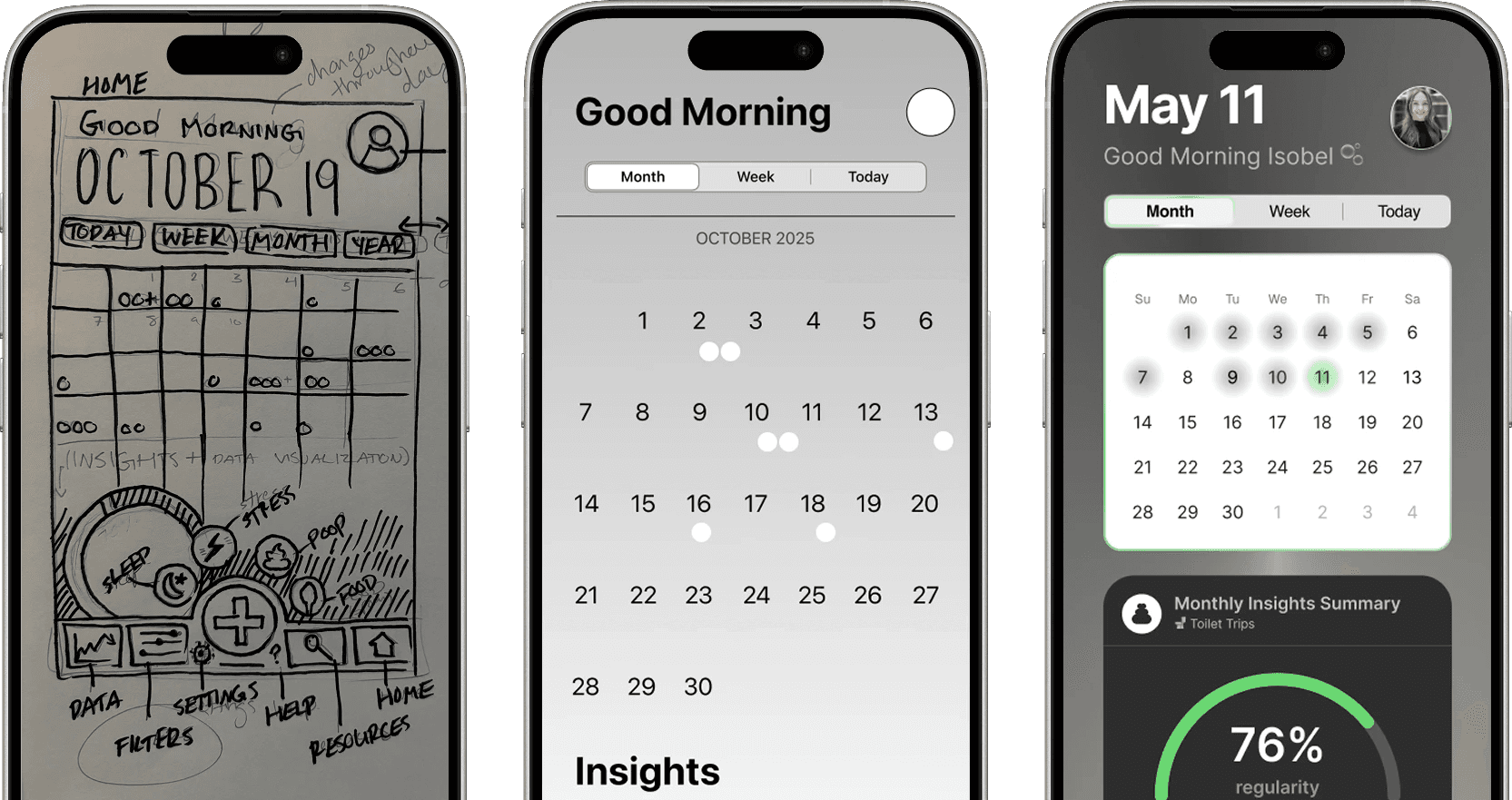
Good news, users liked the flow.
Bad news, they weren't sure about the UI.
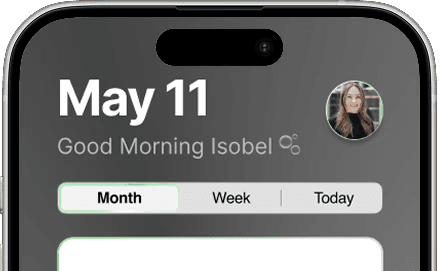
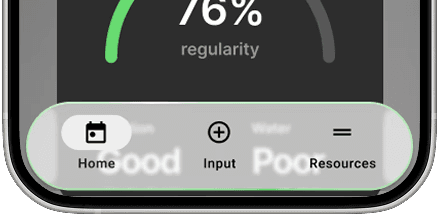
8 usability testing sessions revealed that users had confusion about bottom nav bar buttons, and the 'filtered view' feature. So, it got a rework.
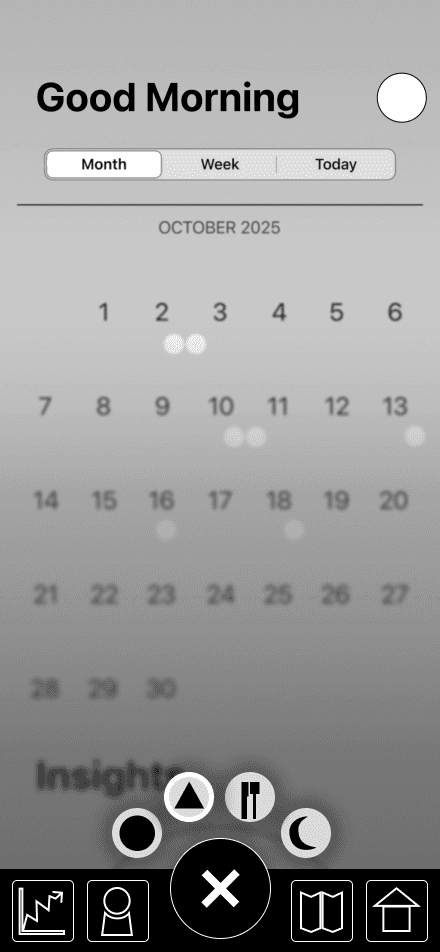
Everyone thought this was the profile icon (it wasn't). In final mockups, this is where I put the profile icon.
Users were confused about the nav bar icons. In final mockups, I clarified and simplified this feature.
FINAL SCREENS
Logging a bowel-movement is easy with GutGuide.
Accessible entry options on the home page for adding entries allows users to focus on how they feel and less on using our app.
During usability testing, participants responded positively to the 'Input' call to action in the centre of the nav bar. I refined this feature for the final screens.

Icons are intentionally ambiguous. Awkwardness wasn't a problem I could fix, instead, I avoided using obvious visuals to accommodate uncomfortableness.
Existing health trackers on the market with complex graphs and elaborate data causes disengagement from users.
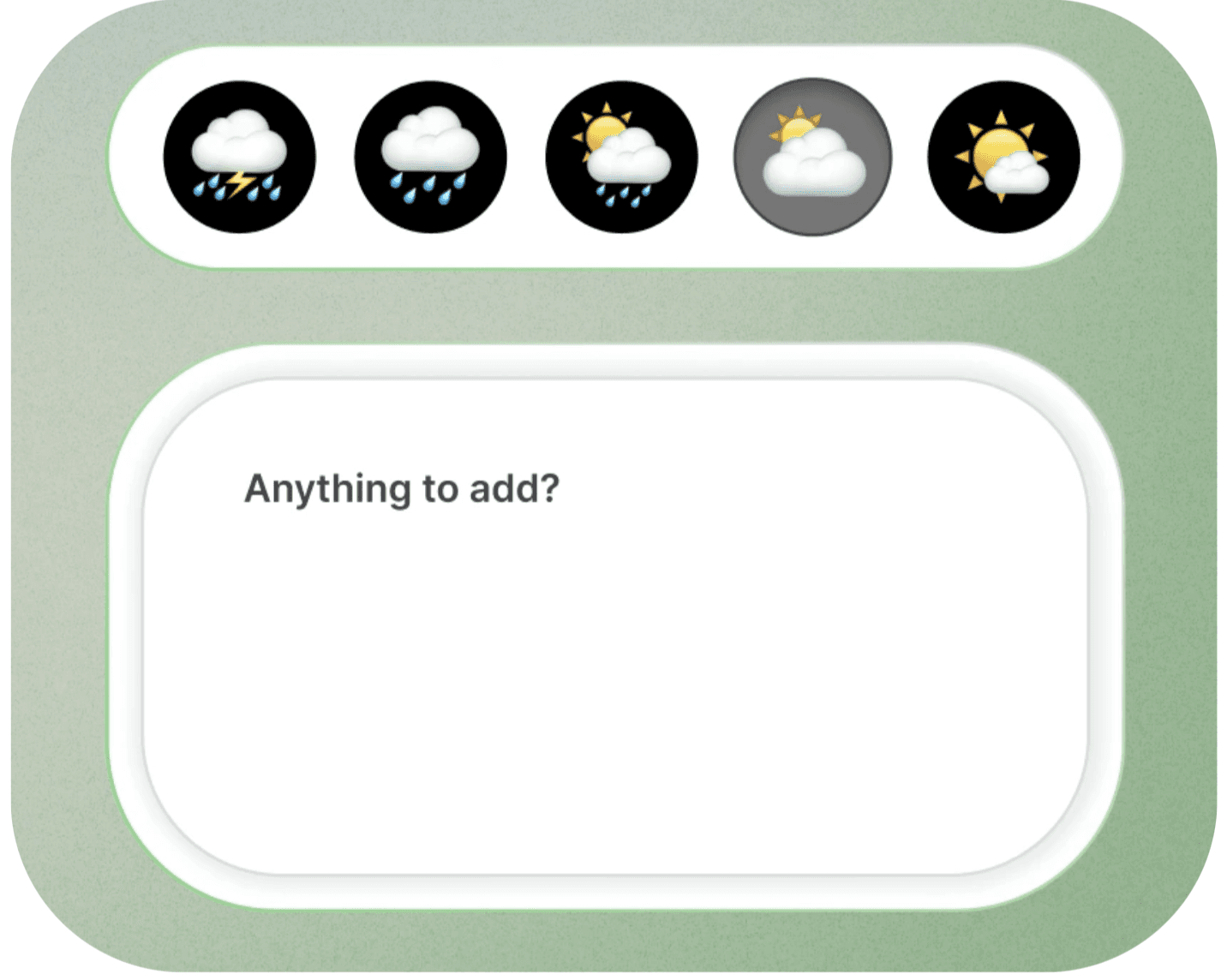
GutGuide's concise input categories decrease decision fatigue.
Emoji-ranking systems provide clear, simple criteria choices
Additional notes gives users the option to log highly detailed data if they need to.
Turn emojis into evidence, and patterns into a plan.
Past entries are organized through the same emoji tagging system as the input criteria, making GutGuide's long-term pattern insights simple for users to trust.
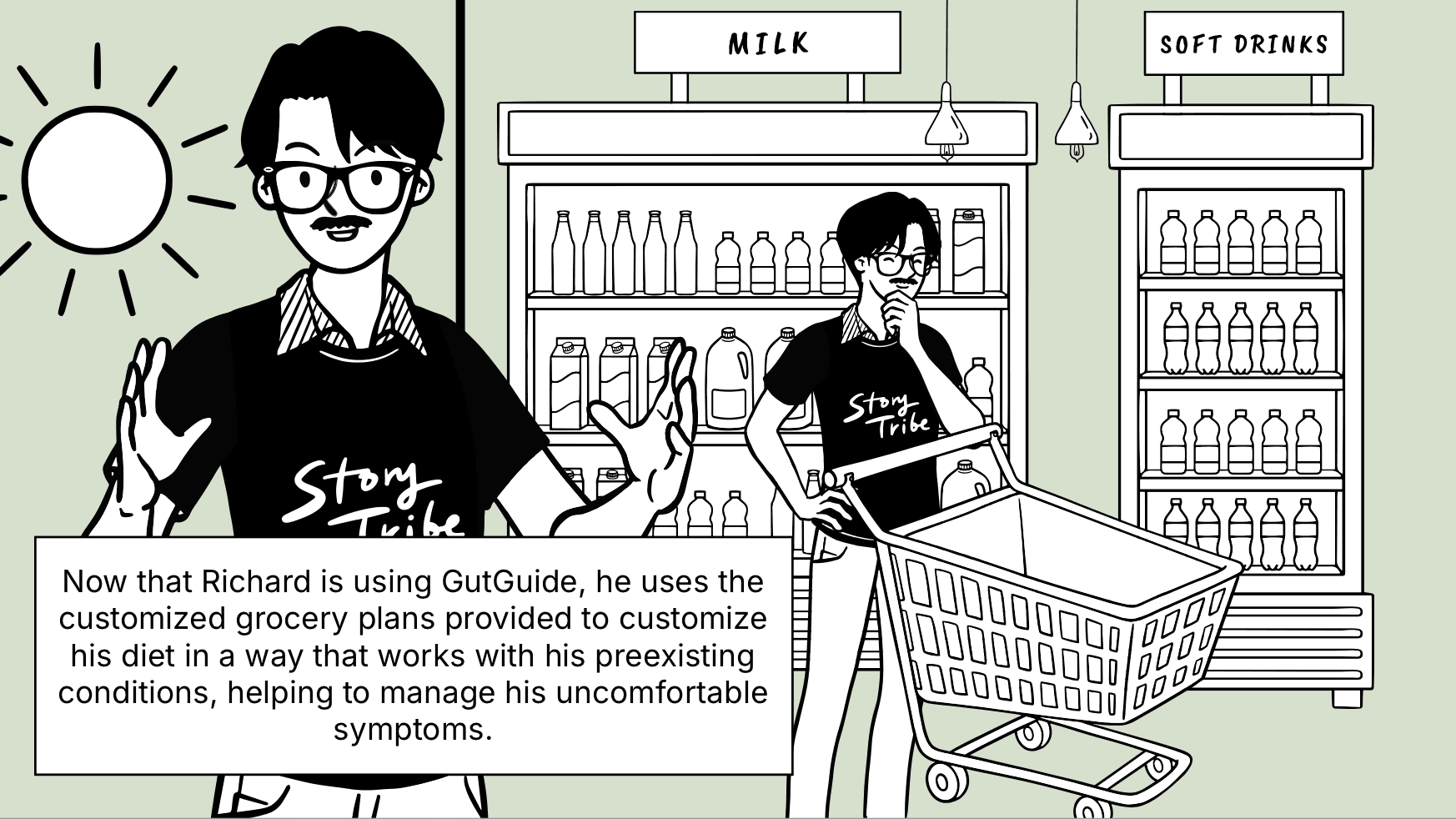
AI driven insights create actionable treatment plans like grocery lists and sensitive food lists based on long-term user data.
General plans allow users the freedom to adjust our suggestions into strategies that work best for them.
Easily view insights derived straight from your own entries.
GutGuide's short term insights give users a bite-sized overview of their progress, indicating how they might become better aligned with their personal goals.
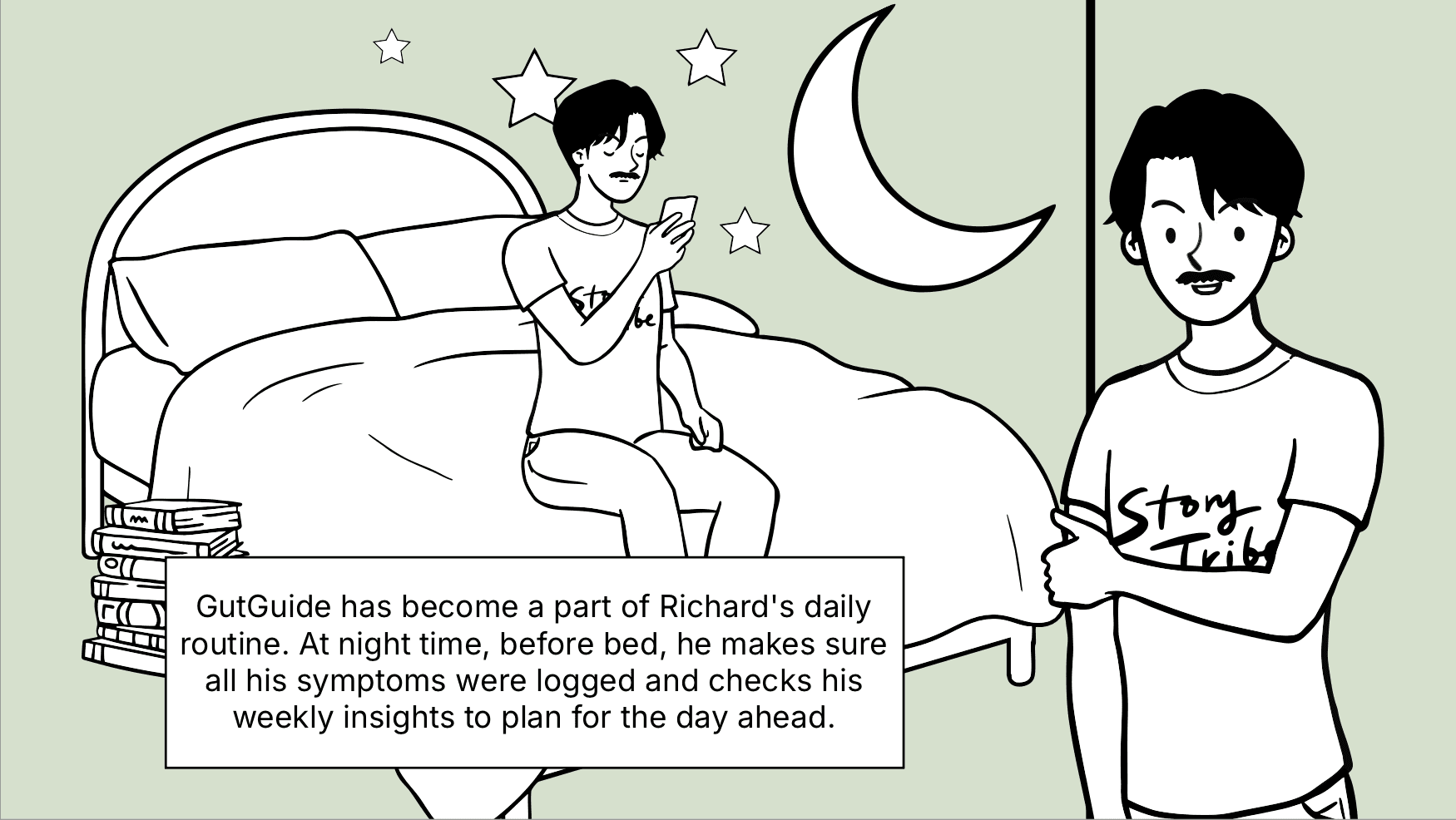
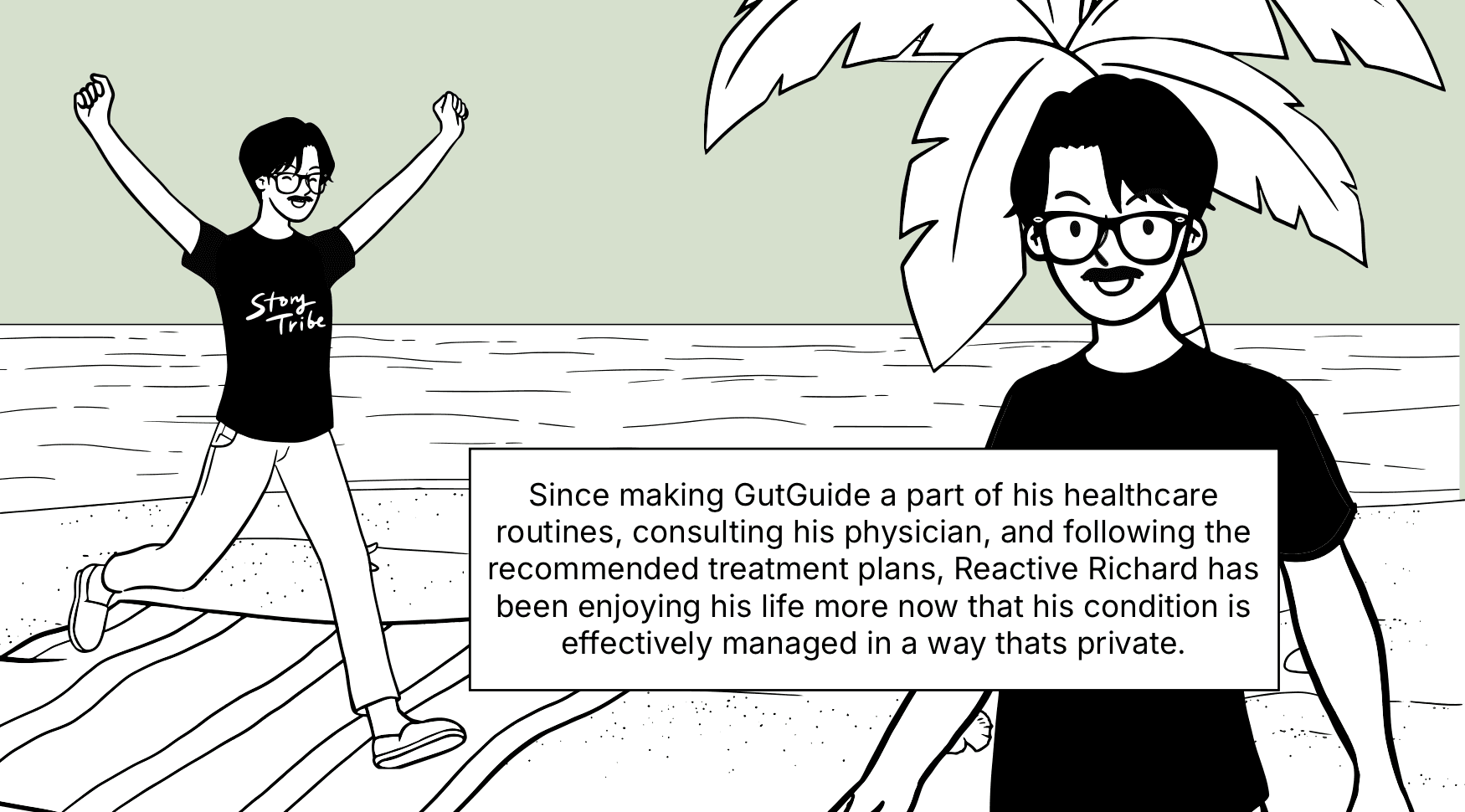
Now, Richard has the tools to be less reactive,
and more preventative.
TAKEAWAYS
UX lessons from a sensitive space.
User feelings are more complex than they seem.
Users skipped entries because of anxiety, not laziness. Accepting instead of persuading behaviour reshaped how I designed motivation and support.
Consistency beats complexity.
Simple, feasible actions win over fancy charts, any day.
Next case study →