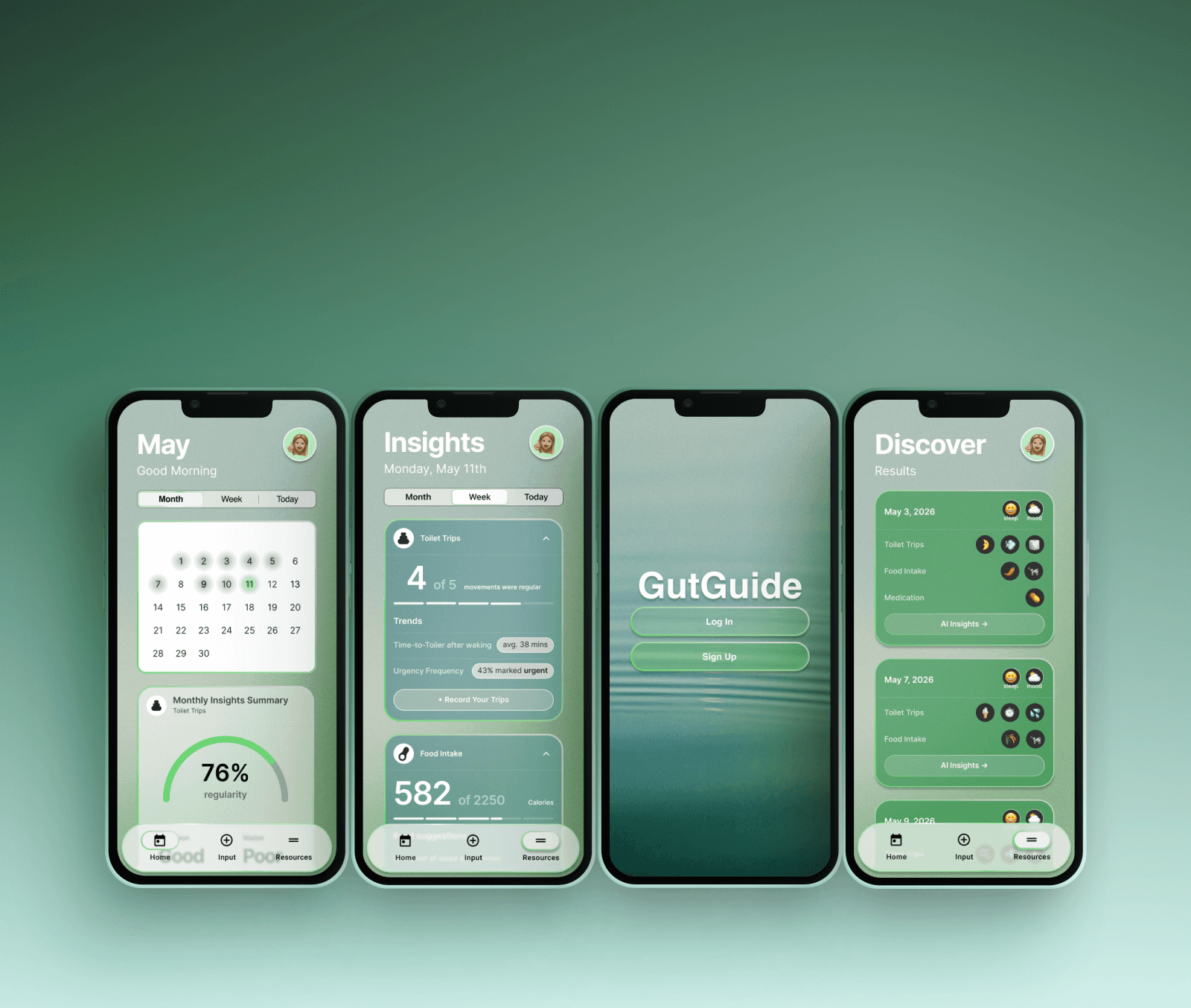
Accommodating health anxiety with frictionless, AI insights.
Type
Course work
Role
Lead UI / UX designer
Duration
4 months
Team
4 students
PROBLEM
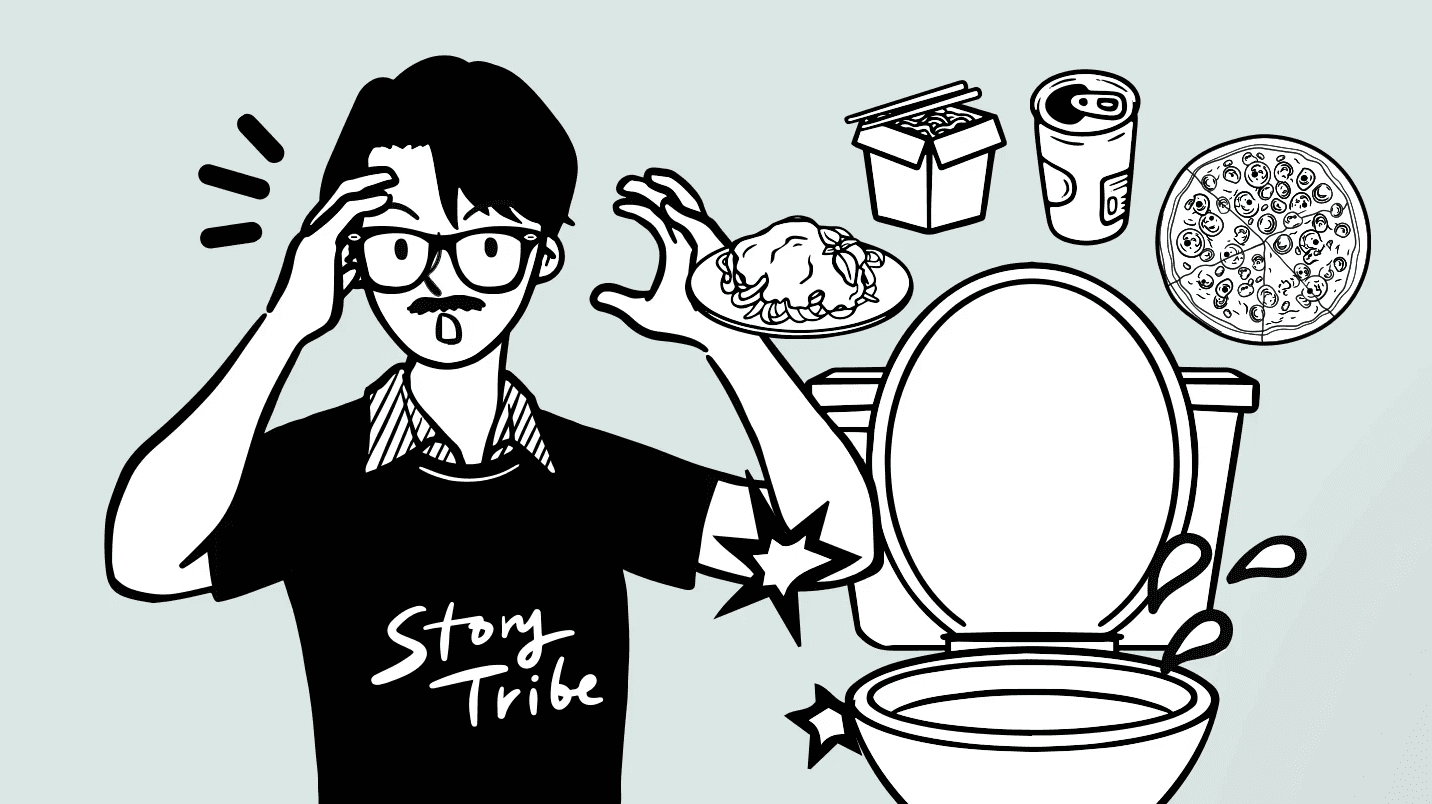
We don't talk about our gut health enough.
Gut flare-ups are confusing and scary, intensified by information overload and the absence of clear, long-term symptom patterns.
SOLUTION
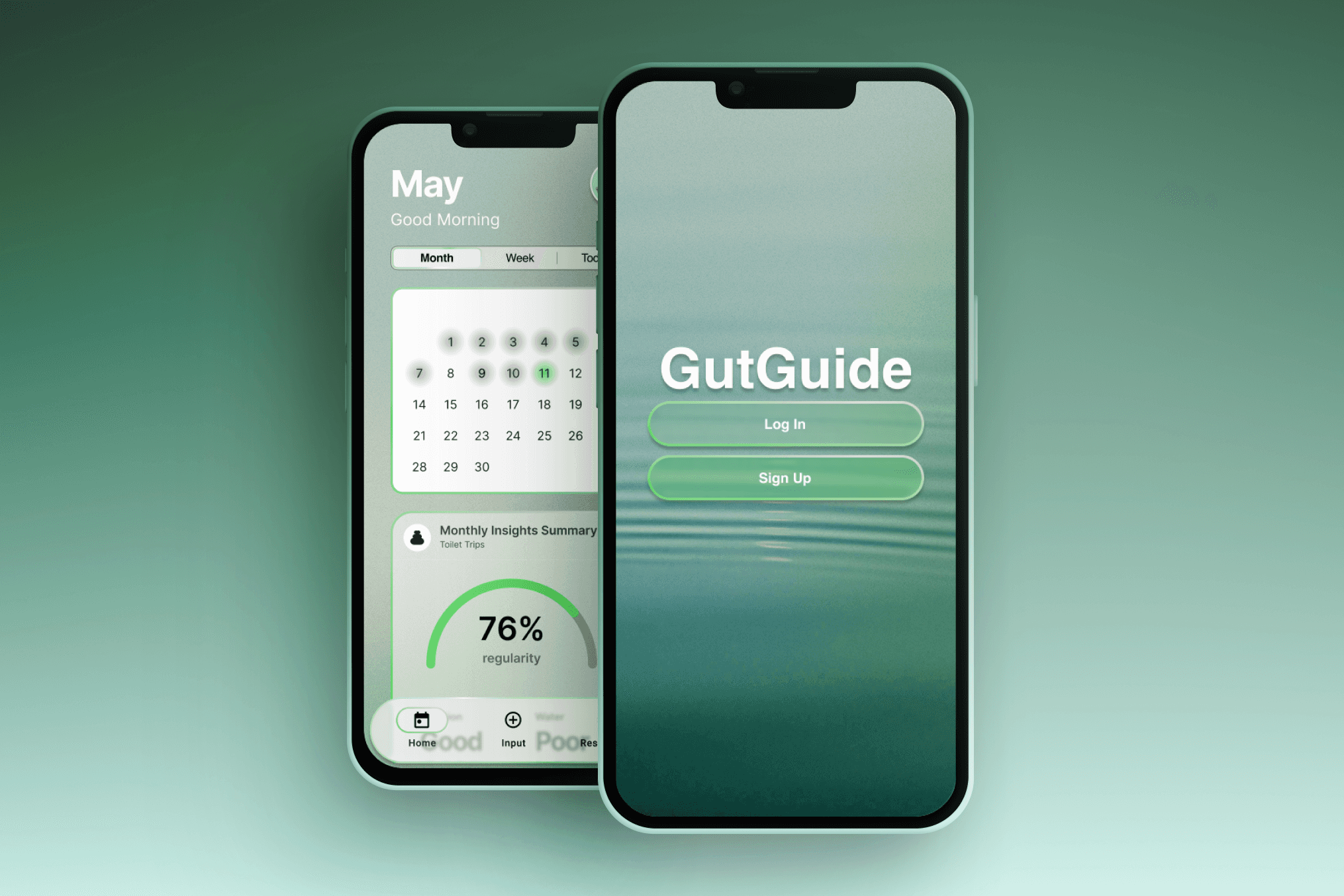
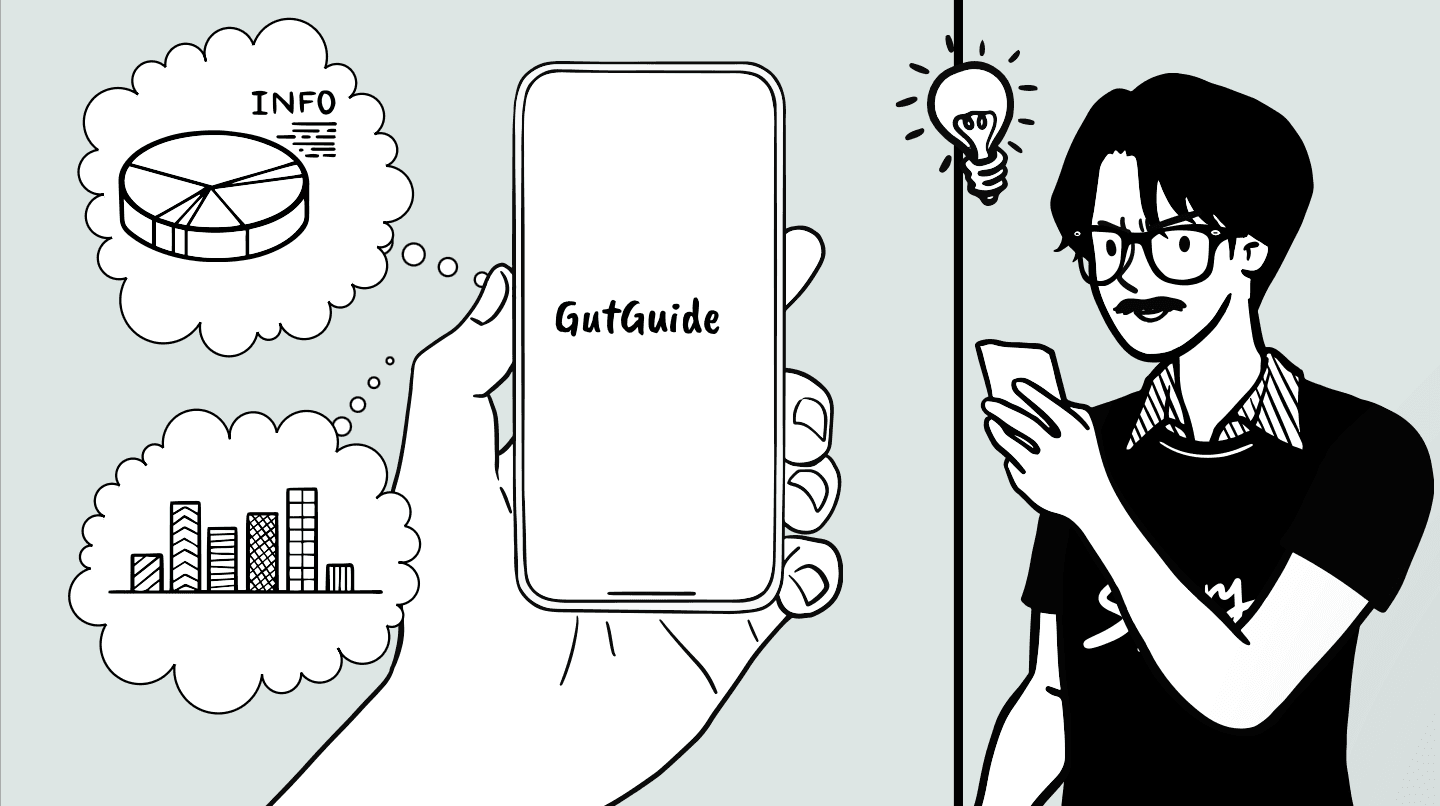
A calming, non-committal symptom tracking system backed by verified health data.
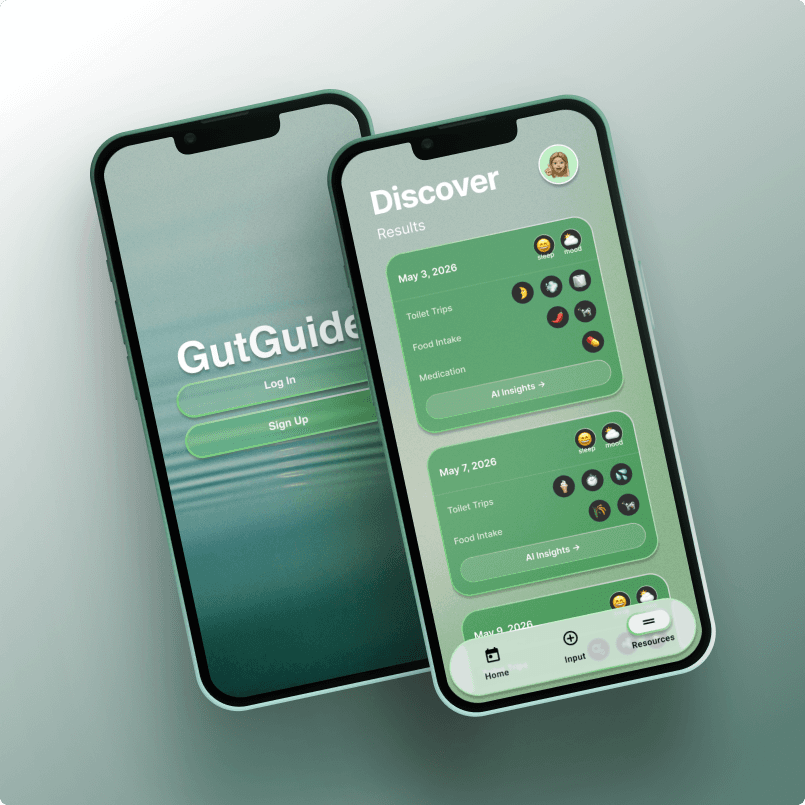
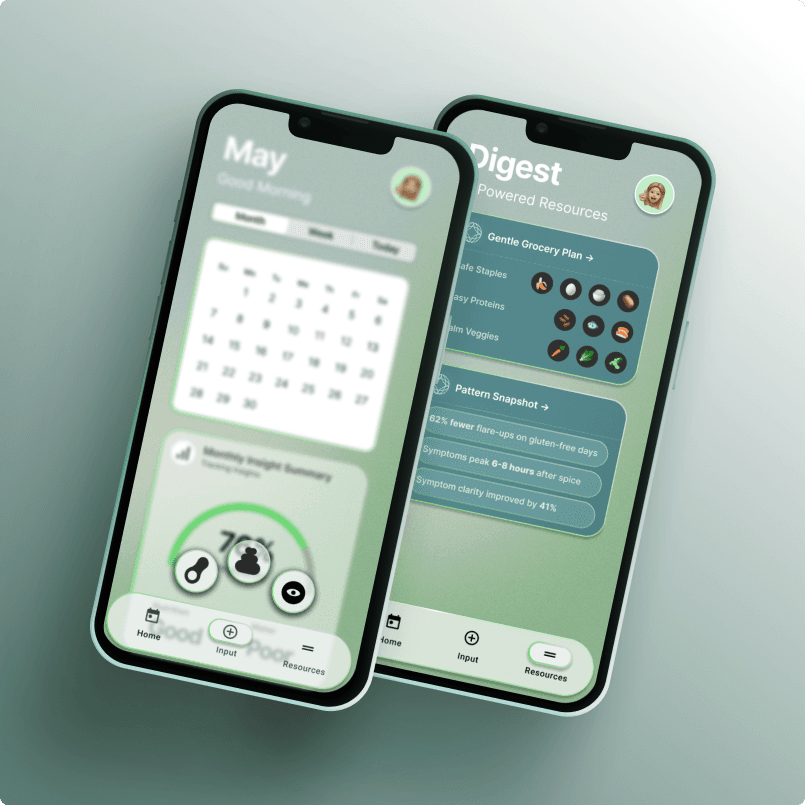
GutGuide uses transparent health data, a simple symptom management system, and tailored AI insights that clarify treatment directions for anxious users.
USER INTERVIEWS
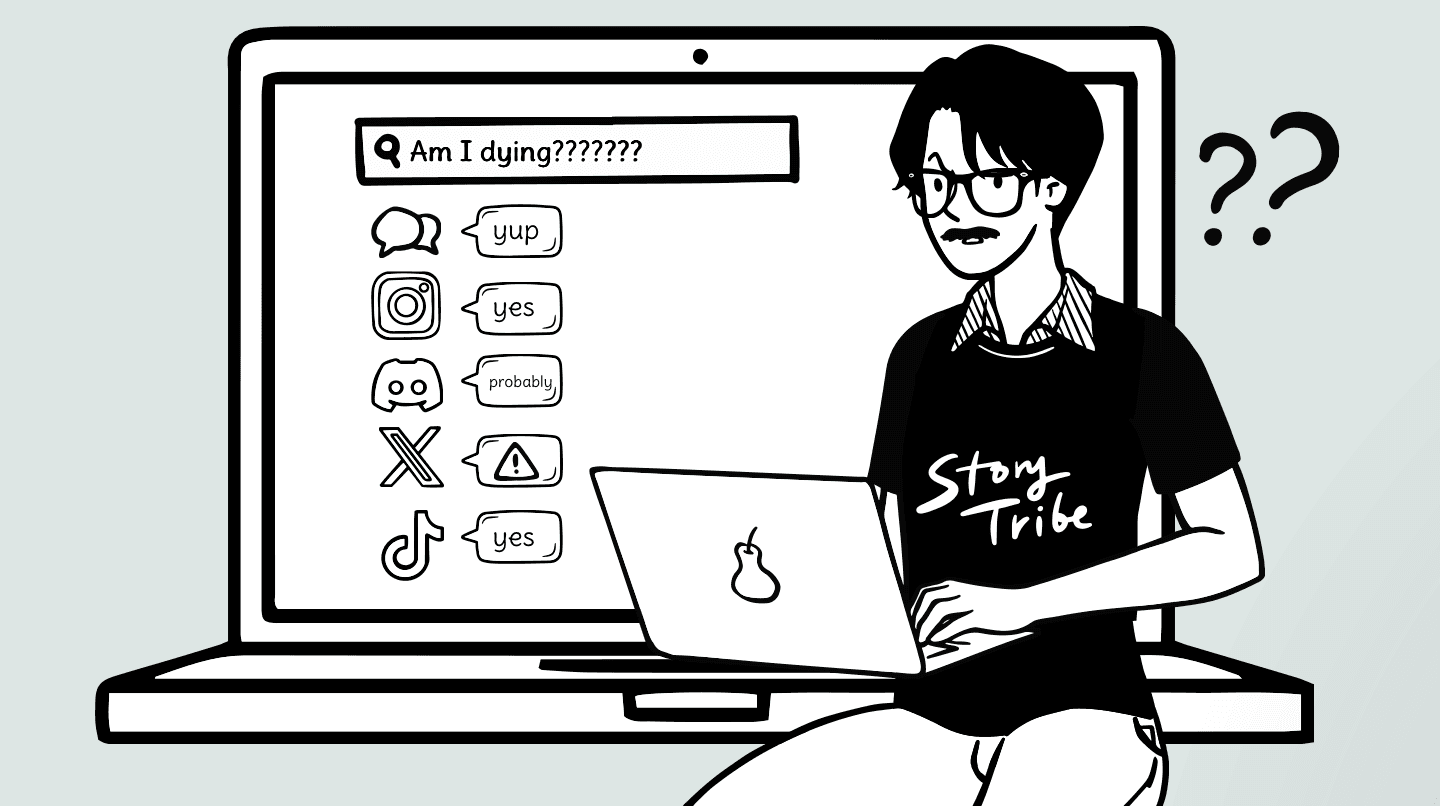
Lacking clear, reliable health resources
is a major cause of our user's anxiety.
Flare-up triggers are complex and highly varied, social feelings about toilet-talk are tense, and users are hesitant to adhere to tracking schedules that benefit them most.

Design insight
I turned each user interview insight into a feeling we could draw from for future design choices. Each negative feeling associated with our users stressful experiences can be countered with a positive one that GutGuide can encourage.
COMPETITIVE ANALYSIS
We wanted user-engagement, but would gamification really benefit our users?
Our initial ideation stages considered location and image sharing with friends to incentivize users to reach out to others about what they normally keep private. But, interviews indicated that gut health experiences were more sensitive than we assumed.
Stardust
✓ Simple customizable input options.
X Long lists of options can create choice-overwhelm for users.

Plop
✓ Medical-standard data input options.
X Insight visualization data uses hard-to-read charts.

Poopie
X Makes fun of a stressful experience.
X Gamified features can negatively impact user engagement.
"Despite its broad application, there are concerns that cheating, privacy violation, and gradual loss of interest among users prevent the success of gamification in healthcare."
– Al-Rayes et al., 2022
“[instead of gamified interventions] some healthcare professionals recommended adopting a tailored and individualized approach for long-term behavioural adherence and success.”
– Stefoska-Needham & Goldman, 2024
Design insight
We ditched the gamification ideas, and focused on existing features. Simple input options and easy-to-understand insights meant user-engagement would come form the users curiosity about themselves.
Design decisions
HOW MIGHT WE
So, how might we ease stress, verify information, and maintain tracking habits?
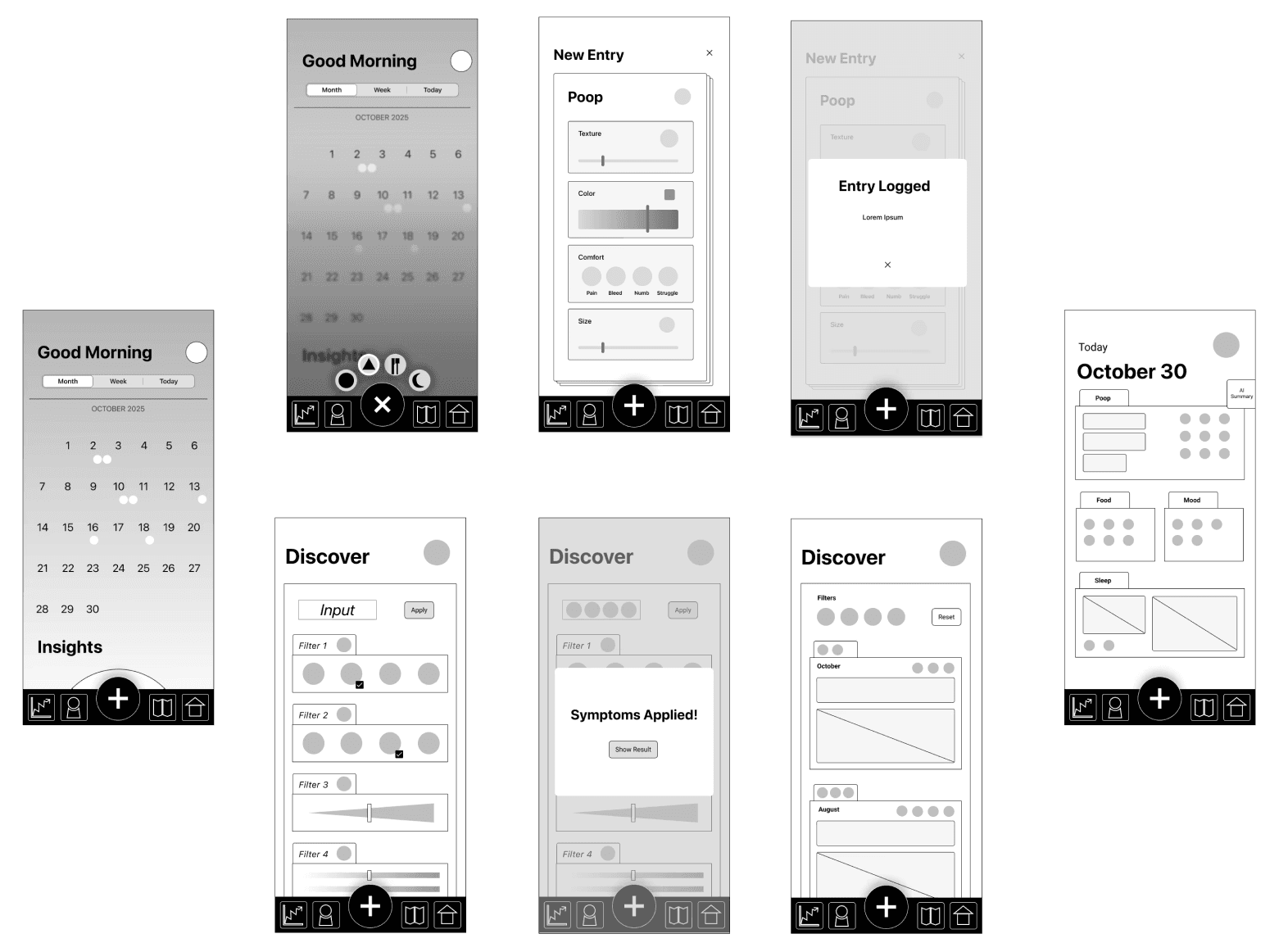
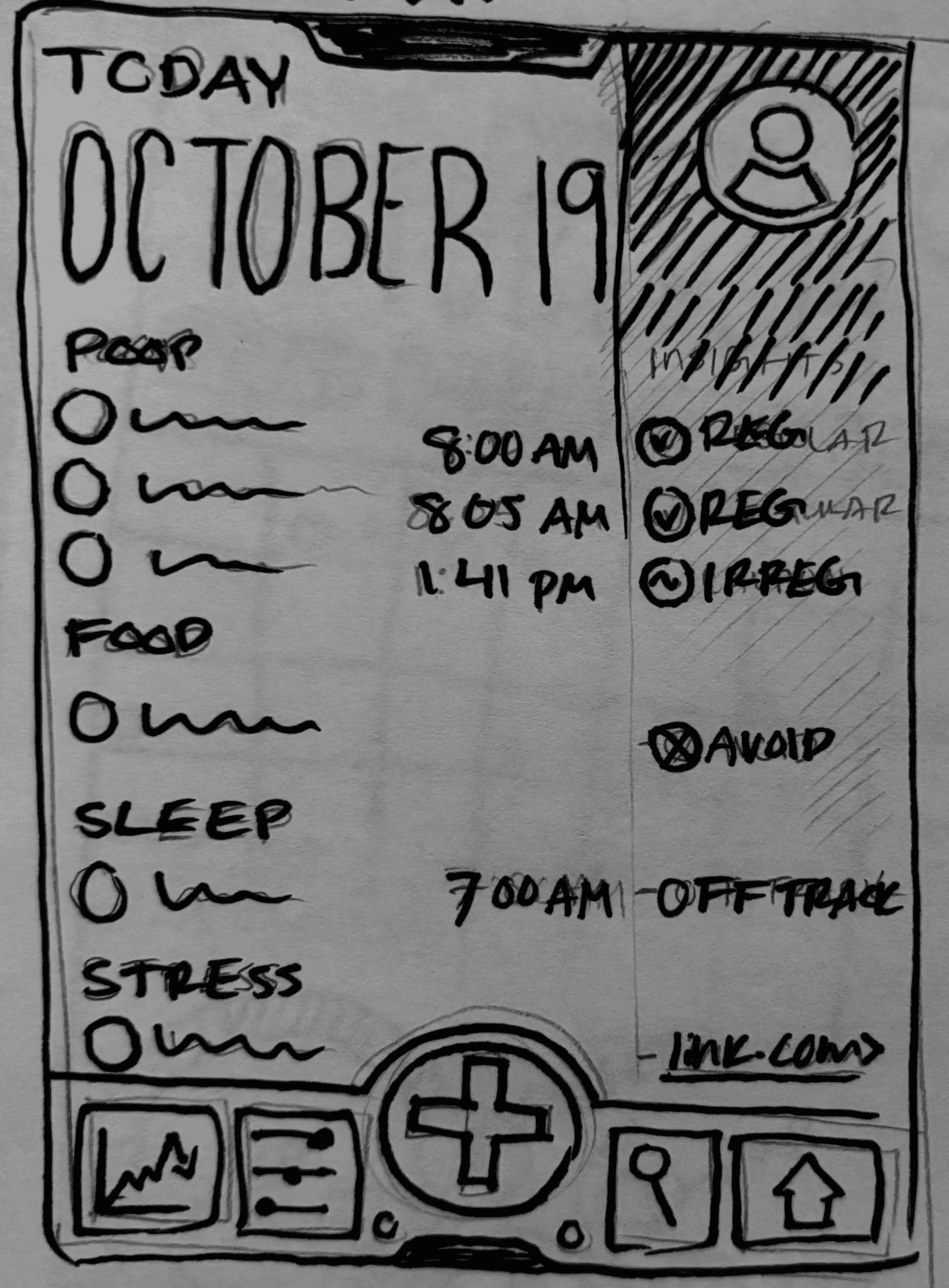
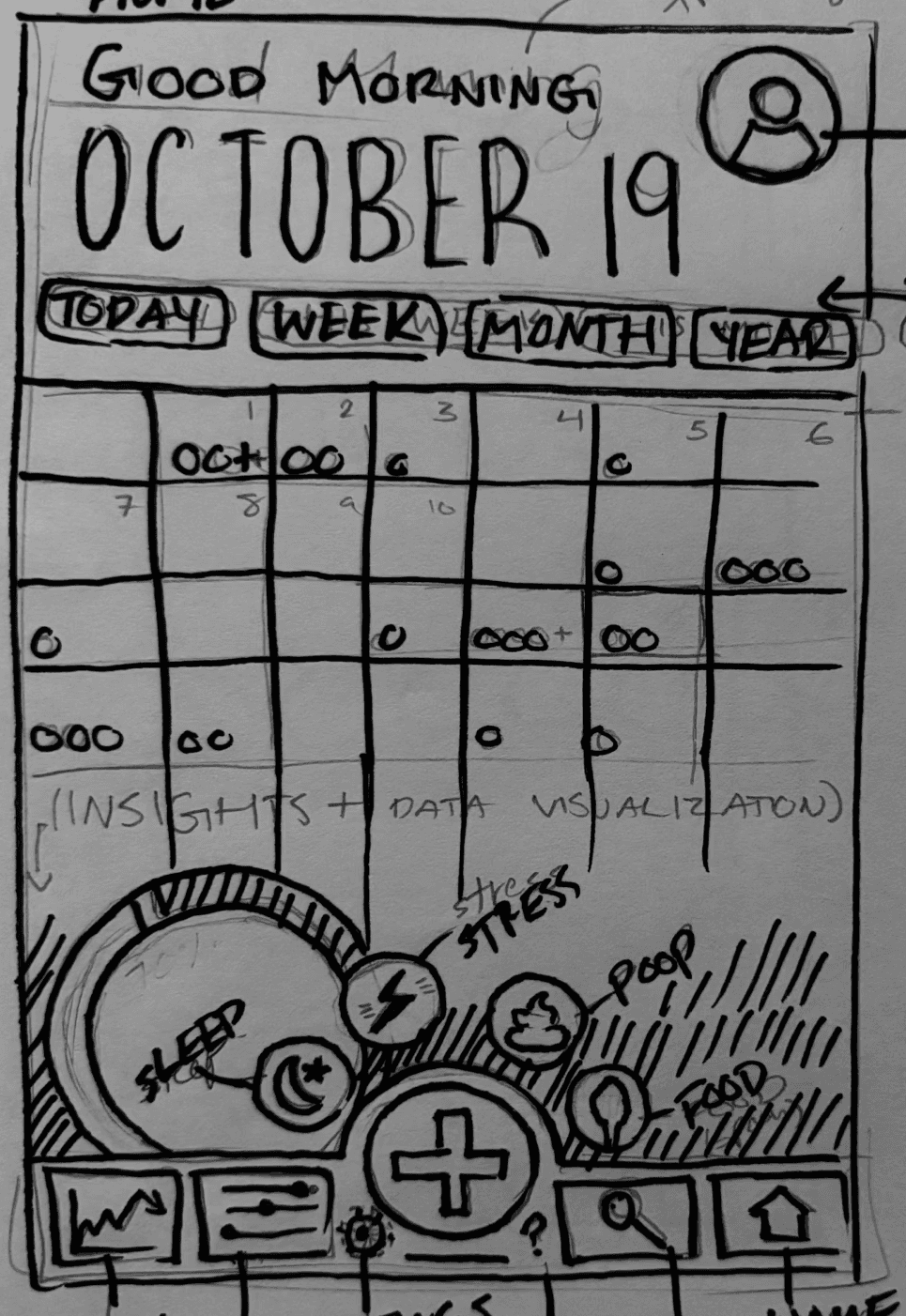
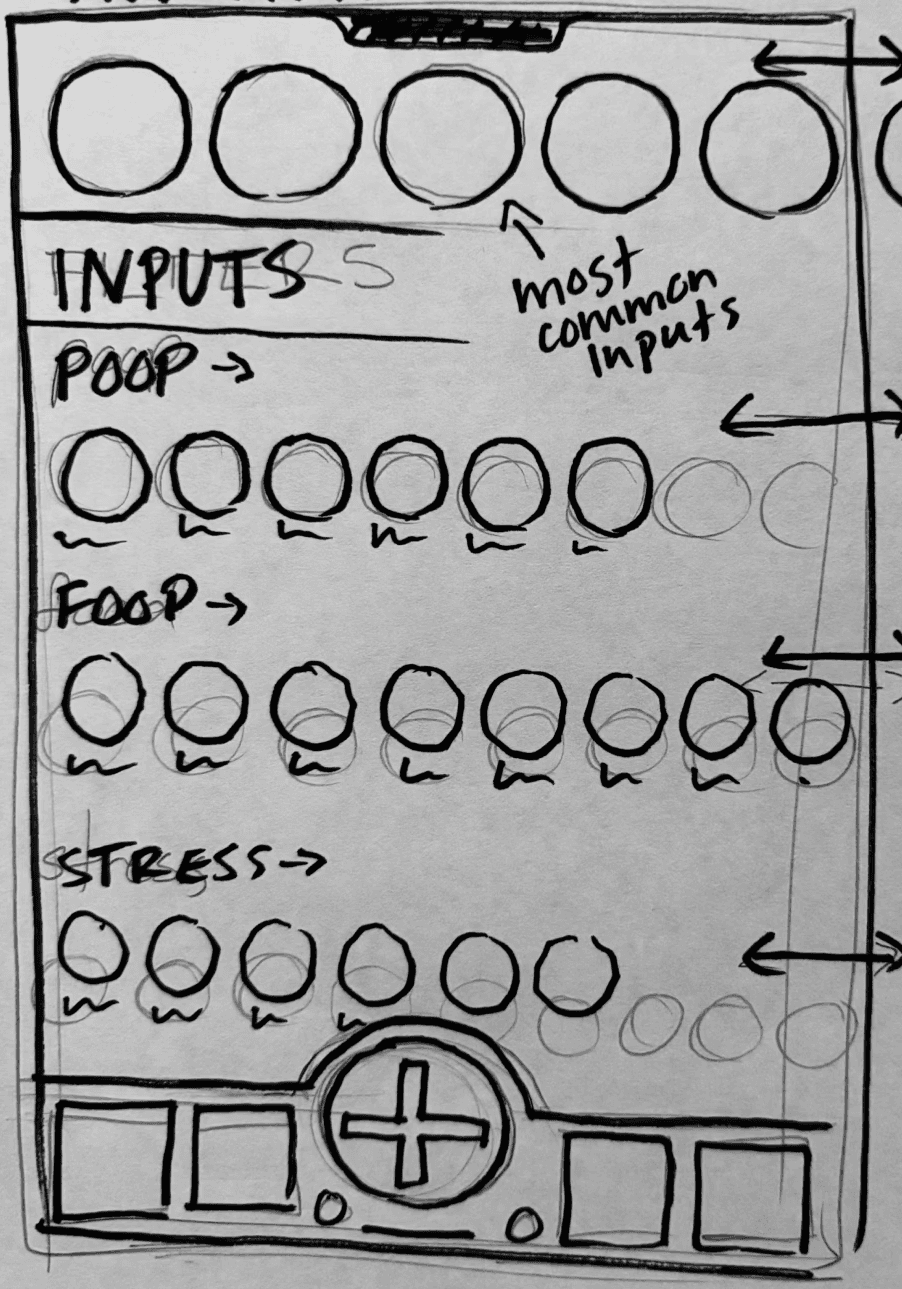
(1) Identifying patterns, (2) knowing treatment options , and (3) articulating symptoms eases the stress caused by flare-ups. Our user-flow oriented on these three steps.
Design insight
As we thought about user flows, these three core functions indicated HOW we could translate pain-points into design opportunities that connected back to our user research.

Consistency
Identifying patterns.

Health anxiety
Knowing treatment options.

Awkwardness
Articulating symptoms.
USABILITY TESTING
Good news, users liked the flow.
Bad news, they weren't sure about the UI.
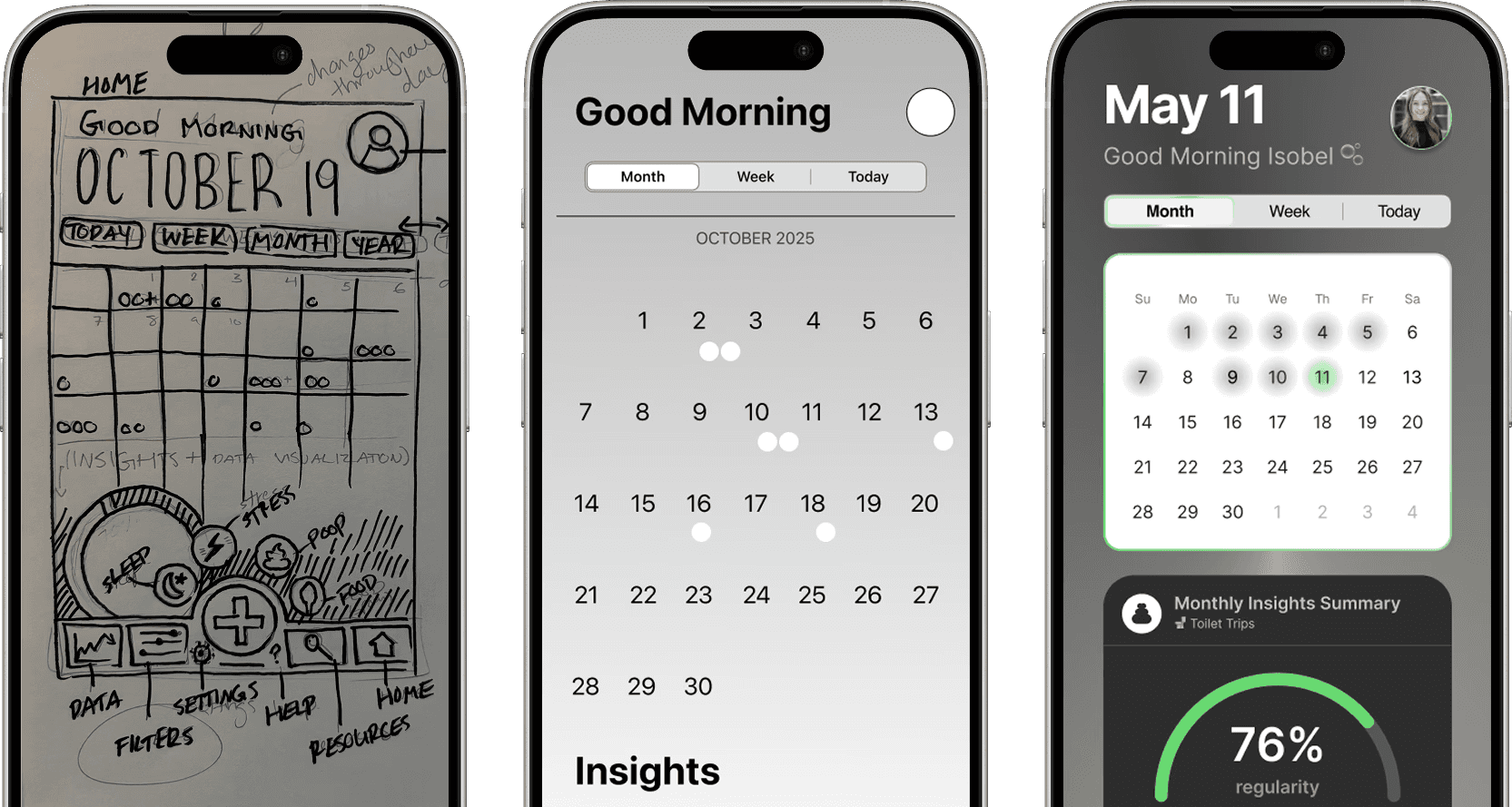
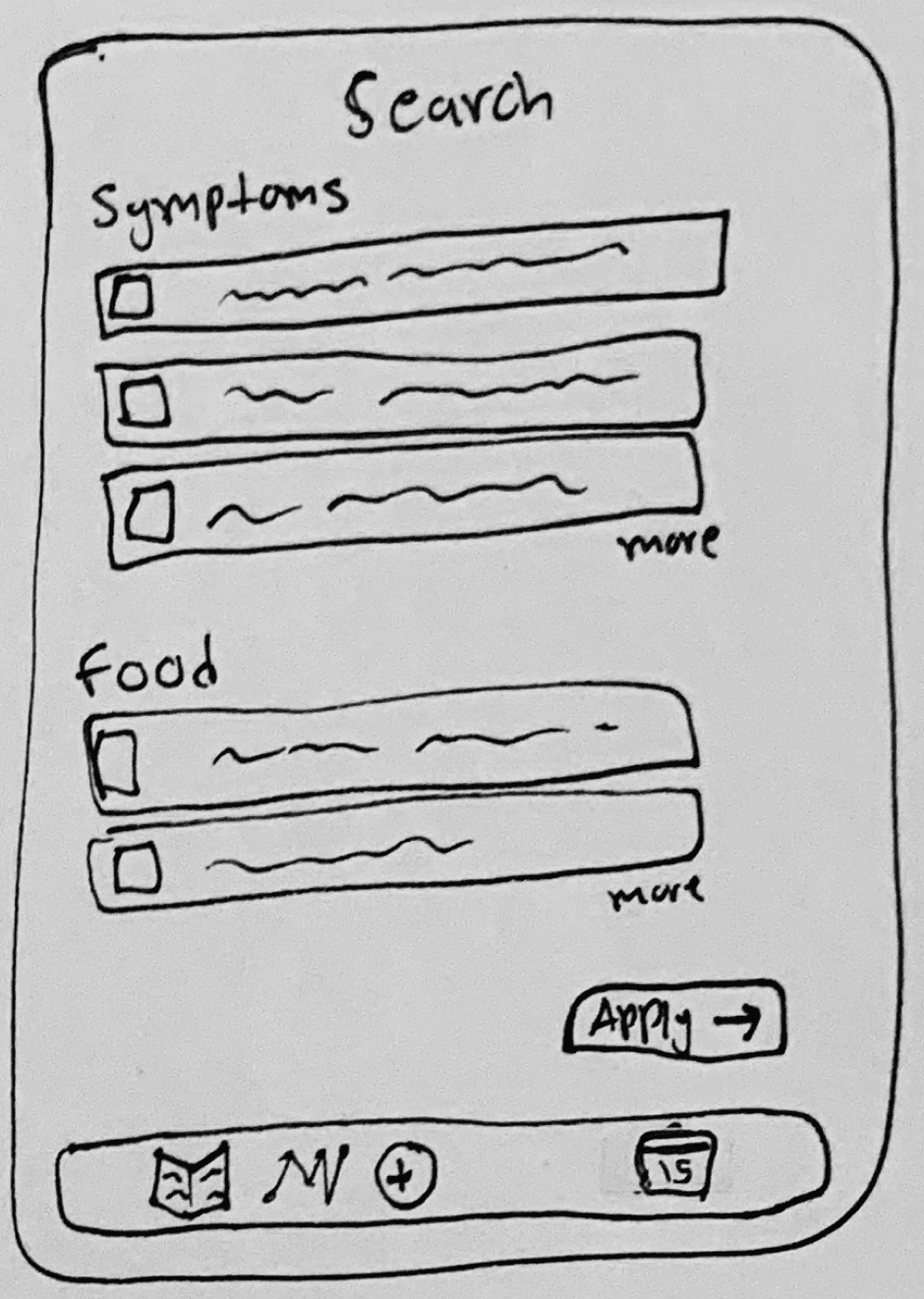
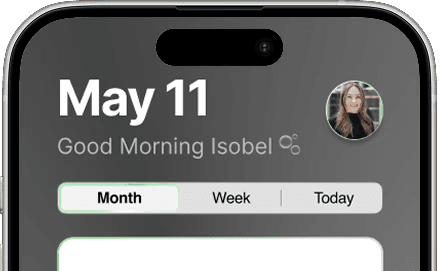
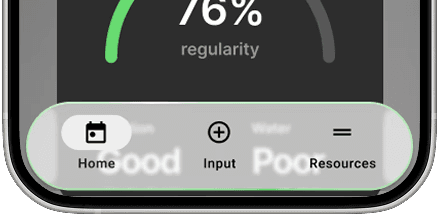
8 usability testing sessions revealed users had confusion about the nav bar controls, and the 'filtered search' feature. I gave it a rework.
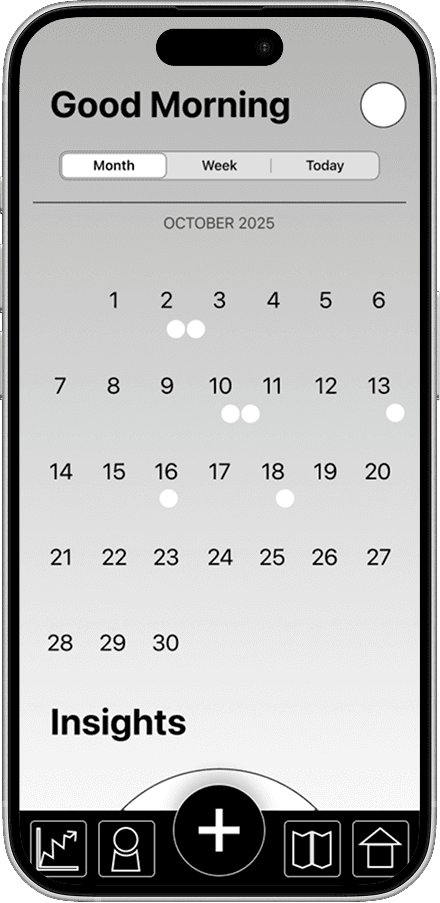
X Everyone thought this white circle icon was for your profile, it wasn't.
✓ In final mockups, I placed the account icon where users expected it to be.
X Users were confused about the nav bar icons.
✓ In final mockups, I clarified and simplified the menu options.
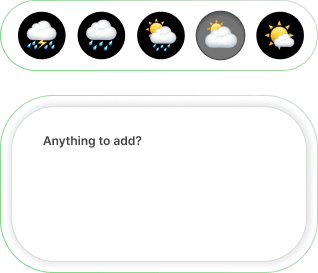
Final screens

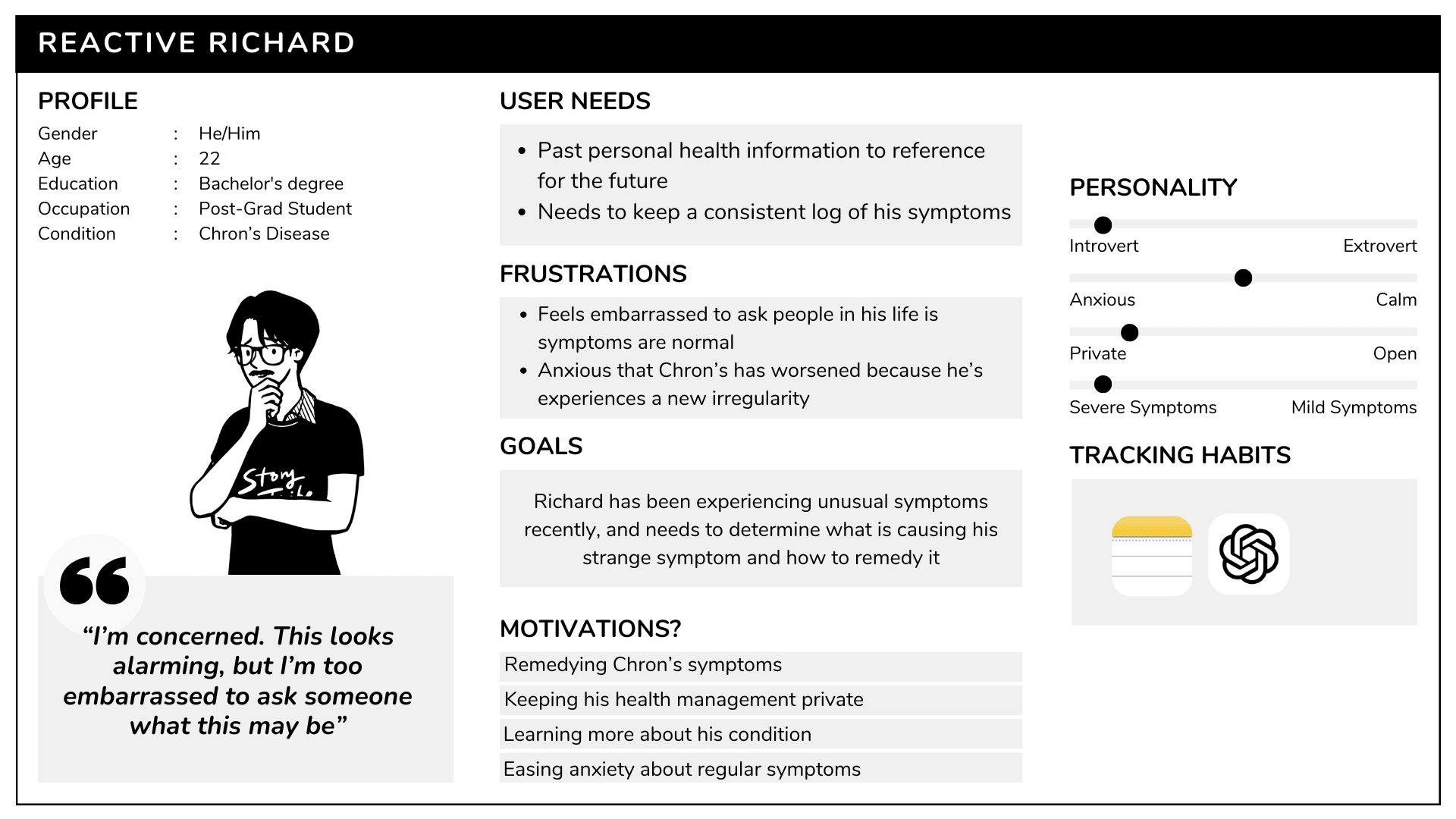
"… if I sense that there's, like a severe issue. Then I'll record it on my notes app... the notes app is mixed with everything …"
– Interview Participant D
"… I'm missing what effective ways to manage or treat [symptoms] are … it would be nice to know if there is anything that helps …"
– Interview Participant C